Smart home technology has come a long way.
What used to feel like a luxury is now pretty normal. You can turn off your lights from your phone, check who's at the front door while you're at work, and tell your thermostat to cool the house before you get home.
But here's the problem.
There are a lot of smart home products out there.
Some are genuinely useful. Others sound amazing until you realize you spent $100 on something that saves you about three seconds a day.
If you're going to spend money upgrading your home, you want to spend it wisely.
So which smart home upgrades are actually worth the money?
We've put together 10 that can make your home more convenient, comfortable, secure, and appealing to future buyers.
And no, you don't need to turn your house into a spaceship.
1. A Smart Thermostat
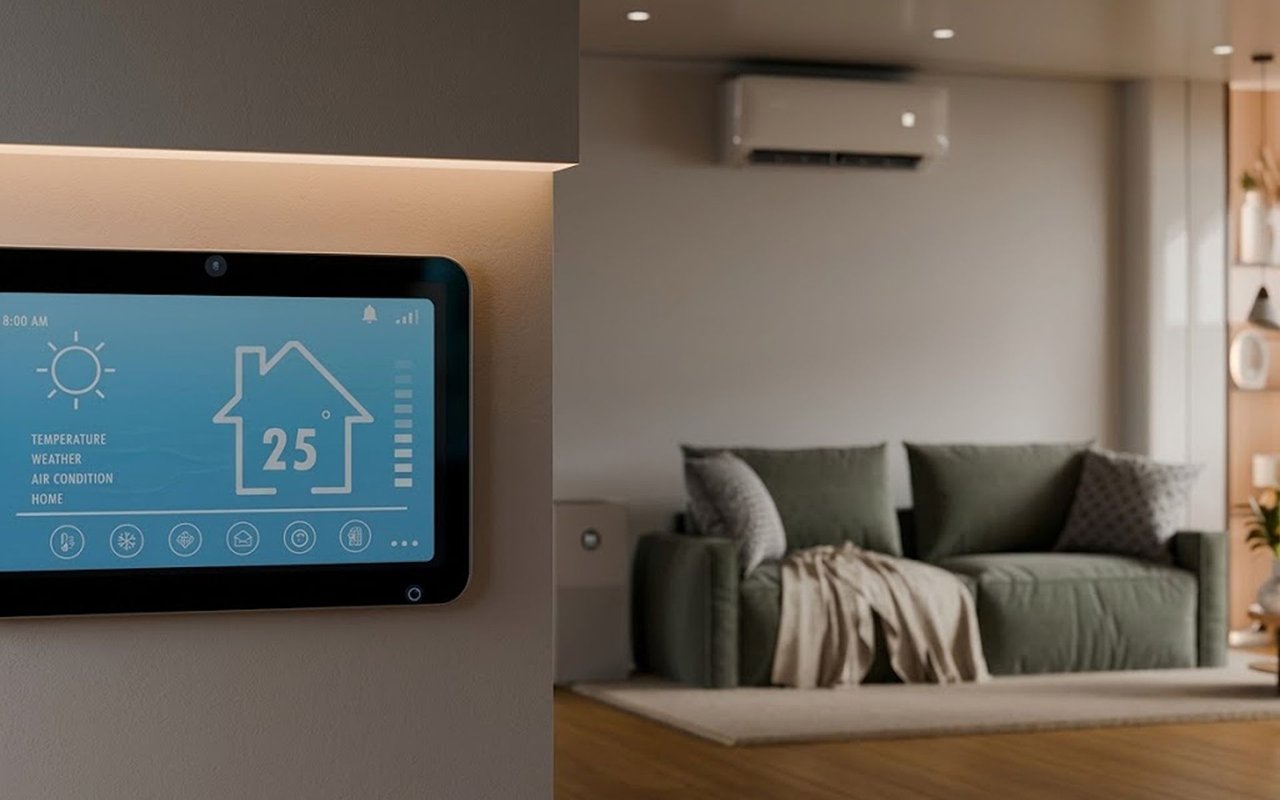
Let's start with one of the easiest upgrades: a smart thermostat.
A smart thermostat can help you control your home's temperature from your phone. Many models can also learn your schedule or adjust the temperature when you're away.
That can be especially useful here in North Texas.
Texas summers are no joke.
Nobody wants to come home after a long, hot day to a house that feels like an oven. At the same time, you don't want your air conditioner working hard all day to cool an empty house.
A smart thermostat can help you manage your home's heating and cooling schedule.
Why It's Worth It
A smart thermostat can offer:
- Remote temperature control.
- Scheduling.
- Energy-use information.
- Away settings.
- Smart-home integration.
- Automatic temperature adjustments on some models.
Before buying one, make sure it's compatible with your HVAC system.
And if your air conditioner is older or struggling to keep up, a thermostat isn't going to solve the bigger problem.
For Texas homeowners, keeping your HVAC system maintained is still one of the most important things you can do.
2. Smart Doorbell
If you only add one smart security feature to your home, a smart doorbell is a pretty good place to start.
A smart doorbell can let you see who's at your door, receive motion alerts, and communicate with someone without opening the door.
That's helpful when you're home.
It's even more helpful when you're not.
Imagine you're at the grocery store and get an alert that someone is at your front door. You can check the video and decide whether you need to do anything.
You can also use it to keep an eye on deliveries.
Why It's Worth It
A smart doorbell can add:
- Convenience.
- Package awareness.
- Video monitoring.
- Motion alerts.
- Two-way communication.
And let's be honest—there's something really satisfying about checking your doorbell camera and realizing that the "person at the door" was actually just the delivery driver dropping off the thing you forgot you ordered.
3. Smart Locks
Have you ever left the house and then wondered:
"Did I lock the door?"
A smart lock can help with that.
Depending on the model, you may be able to lock and unlock your door using your phone, a keypad, or a digital key.
Some smart locks can also automatically lock after a certain amount of time.
This can be especially handy for families.
Instead of hiding a spare key under a flowerpot, you can give trusted family members their own code.
Why It's Worth It
Smart locks can be useful for:
- Families.
- Guests.
- Dog walkers.
- House cleaners.
- Vacation rentals.
- Forgetful people.
If you have kids, a keypad can also save you from the classic:
"Mom! I forgot my key!"
You know the one.
4. Smart Lighting
Smart lights may sound like a small upgrade, but they're one of the easiest ways to make a home feel more convenient.
You can control certain smart bulbs or switches from your phone or with voice commands.
You can also create schedules.
Want the porch lights to turn on every evening?
Set a schedule.
Want the living room lights to turn off at bedtime?
Set a routine.
Want the lights on while you're away so your house doesn't look empty?
You can do that, too.
Smart Bulbs vs. Smart Switches
This is an important distinction.
Smart bulbs are easy because you simply replace the bulb.
Smart switches are installed into the wall and can control regular light fixtures.
For lights you use every day, smart switches can be a better long-term solution.
Just make sure the switch is compatible with your home's wiring and electrical setup.
If you're not comfortable working with electrical wiring, call an electrician.
5. Smart Water Leak Sensors
This might not be the most exciting upgrade on the list.
But it could be one of the most valuable.
A small water leak can turn into a very expensive problem.
A leak sensor can alert you when it detects water in an area where it shouldn't be.
You can place sensors near:
- Water heaters.
- Washing machines.
- Sinks.
- Toilets.
- Refrigerators with water lines.
- HVAC equipment.
- Basement areas.
This is especially helpful if you're away from home.
A small sensor may cost very little compared with the cost of repairing serious water damage.
Think of It as an Early Warning System
You don't buy a leak sensor because you expect your house to flood.
You buy one because you want to know about a small problem before it becomes a big one.
And that's really the theme of many of the best home upgrades.
6. Smart Smoke and Carbon Monoxide Detectors
Traditional smoke and carbon monoxide detectors are still important.
But smart versions can add another layer of convenience.
Depending on the model, smart detectors may send alerts to your phone when smoke or carbon monoxide is detected.
That means you may be able to receive an alert even when you're away.
Some systems can also tell you which detector triggered the alarm.
Why This Upgrade Makes Sense
Your smoke detectors are there to protect your family.
If you're replacing old detectors anyway, it may be worth looking at smart options.
Just make sure any detector you purchase meets current safety standards and is installed according to the manufacturer's instructions.
And don't remove or disable working safety devices simply to install a smart version.
7. Smart Garage Door Opener
The garage is one of those parts of the house you probably don't think about much.
Until you're halfway to work and suddenly wonder:
"Did I close the garage?"
A smart garage door opener can let you check the status of your garage door from your phone.
Some systems can also alert you if the door has been left open.
That can be incredibly useful.
Why Families Love This One
Think about everything that comes through your garage:
- Cars.
- Bikes.
- Sports equipment.
- Packages.
- Tools.
- Holiday decorations.
- Random stuff you swear you're going to organize someday.
Being able to check and control the garage door remotely can make everyday life easier.
It can also be helpful when you're expecting a delivery or need to let someone into the garage while you're away.
And if you're already working on that garage, our article How to Organize Your Garage Before Summer has plenty of ideas for making the space more useful.
8. Smart Plugs
Smart plugs are probably the easiest smart-home upgrade on this list.
You plug the device into a regular outlet and then plug your appliance into the smart plug.
Depending on the product, you can control the device from your phone or create schedules.
They're great for things like:
- Lamps.
- Holiday lights.
- Fans.
- Small appliances.
- Decorative lighting.
They're also a great way to experiment with smart-home technology without spending a lot of money.
Start Small
You don't have to buy 20 smart plugs.
Try one.
Maybe put it on a living room lamp.
Once you see how useful it is, you can decide whether you want to add more.
That's a much better strategy than buying a whole box of gadgets and realizing three months later that you have no idea what half of them do.
9. Smart Blinds and Shades
This is one of the more expensive upgrades on the list, but it can make a big difference in certain homes.
Smart blinds can be opened and closed on a schedule or controlled through an app or smart-home system.
This can be especially useful for homes with large windows.
And in Texas, managing sunlight can help make your home more comfortable.
You could create a schedule that closes certain shades during the hottest part of the day and opens them again in the evening.
Are They Worth the Cost?
Maybe.
If you have basic blinds that work perfectly fine, replacing all of them with smart shades probably isn't necessary.
But if you're already replacing window coverings, smart options may be worth considering.
I'd put this in the "nice upgrade, but not first priority" category.
10. A Smart Home Hub or Connected Home System
Here's where things can get a little complicated.
You can have smart lights.
A smart thermostat.
A smart doorbell.
A smart lock.
A smart garage door.
And suddenly your phone has approximately 47 different apps.
That's not exactly making your life easier.
A connected smart-home system can help bring compatible devices together so you can control more of your home from one place.
Depending on the system and devices you choose, you may be able to create routines.
For example:
Good Morning
- Turn on kitchen lights.
- Open certain blinds.
- Adjust thermostat.
Leaving Home
- Turn off lights.
- Lock doors.
- Adjust thermostat.
Good Night
- Lock doors.
- Turn off lights.
- Adjust thermostat.
- Arm security system.
That's where smart-home technology becomes truly useful.
The goal isn't having the most gadgets.
The goal is having a home that works better for you.
What Smart Upgrades Add the Most Value?
Here's something important to remember:
Not every smart upgrade will add the same amount of value to your home.
If you're upgrading your house because you plan to sell soon, focus on features that buyers actually care about.
Security features, energy-saving features, and convenient systems tend to be easier to understand than a random gadget that does one very specific thing.
For example, a smart thermostat may be more appealing to a buyer than a smart device that controls one lamp.
And a good security system can be more meaningful than having every lightbulb connected to Wi-Fi.
Don't Upgrade Just for the "Wow" Factor
Technology changes quickly.
Something that feels incredibly impressive today might be outdated in a few years.
That's why I wouldn't recommend spending thousands of dollars on smart-home technology just because it's trendy.
Instead, ask yourself:
Does this make my home better?
If the answer is yes, it may be worth considering.
Smart Home Upgrades That Aren't Worth the Money
There are plenty of smart products that sound fun but may not be worth the cost for every homeowner.
Think twice about anything that:
- You'll rarely use.
- Requires an expensive subscription.
- Is difficult to repair or replace.
- Only works with one specific system.
- Doesn't solve an actual problem.
- Will become outdated quickly.
The smartest upgrade is usually the one that solves a problem you already have.
If your garage door is constantly left open, a smart garage opener makes sense.
If you're always forgetting to adjust the thermostat, a smart thermostat makes sense.
If you don't care about controlling your coffee maker from your phone, maybe skip it.
Your coffee maker will survive.
Don't Forget About Basic Home Improvements
Here's my favorite piece of advice when it comes to home upgrades:
Don't let smart technology distract you from the basics.
A smart home is great.
But buyers still care about:
- A well-maintained roof.
- A working HVAC system.
- Good windows.
- Fresh paint.
- Clean flooring.
- Functional bathrooms.
- A well-maintained yard.
- Good storage.
- A clean and comfortable home.
If your air conditioner is struggling, I would put money into fixing that before buying smart blinds.
If your roof needs repairs, handle the roof.
If your kitchen faucet is leaking, fix the faucet.
Smart technology should add to a good home—not cover up problems.
Our article The Hidden Costs of Ignoring Home Maintenance goes into more detail about why keeping up with these basics matters.
Which Smart Upgrades Should You Do First?
If your budget is limited, you don't have to tackle all 10.
I'd start with the upgrades that solve an everyday problem.
Best Budget-Friendly Options
Start with:
- Smart plugs.
- Smart bulbs.
- Smart doorbell.
- Smart thermostat.
- Smart leak sensors.
These can give you a taste of smart-home technology without turning your house into a science project.
Best Upgrades for Security
Consider:
- Smart doorbell.
- Smart locks.
- Smart smoke and carbon monoxide detectors.
- Smart garage door opener.
- Water leak sensors.
Best Upgrades for Convenience
Consider:
- Smart thermostat.
- Smart lighting.
- Smart locks.
- Smart garage door opener.
- Smart-home routines.
Thinking About Selling Your Home?
If you're planning to sell soon, don't go overboard with smart-home upgrades.
Instead, focus on improvements that make your home easier to live in and easier to market.
A smart thermostat, smart doorbell, and smart garage system can be nice selling points.
But they're not going to make up for a home that needs major repairs.
And before you spend money on an upgrade, ask your real estate agent whether it is likely to matter to buyers in your neighborhood and price range.
That's especially important if you're trying to get the best return on your investment.
You can also check out Paint Colors That Make Your Home Look More Expensive for another relatively simple way to improve the look of your home before selling.
The Bottom Line
The best smart home upgrades aren't necessarily the coolest ones.
They're the ones that make your life easier.
A thermostat that keeps your home comfortable.
A doorbell that lets you see who's outside.
A lock that means you never have to hide a spare key.
A leak sensor that catches a problem before it becomes a disaster.
A garage door opener that lets you check the door from your phone.
Those are upgrades you can actually use.
And that's the secret to making smart-home technology worth the money:
Don't buy technology just because it's smart. Buy it because it makes your home smarter for you.
Whether you're planning to stay in your home for years or you're thinking about selling, focus on improvements that add comfort, convenience, and function.
Because at the end of the day, the smartest home isn't the one with the most gadgets.
It's the one that works best for the people who live there.